THE PASSAGE
Open P.Arts Collective · Estonia
What does it feel like to arrive? To meet someone, face to face, for the first time? To discover what “home” means?
Created by the Open P.Arts Collective, Sara Fontana, Marleen Kuusik and Heleri Luuga, within the framework of the P.A.I.R. project, THE PASSAGE (Estonian: Kaasteelised) is a multisensory installation that invites two people to journey together through three stages: birth, encounter and coexistence.
Built from fabric, touch, sound, moving image and storytelling, the installation offers no single way of experiencing a space. Visitors can choose how they move, what they touch, how long they stay, how close they come to one another, and which senses they use. At its heart is a simple but expansive question: how do we encounter another person, and what makes a place feel like home?
Three rooms, one journey
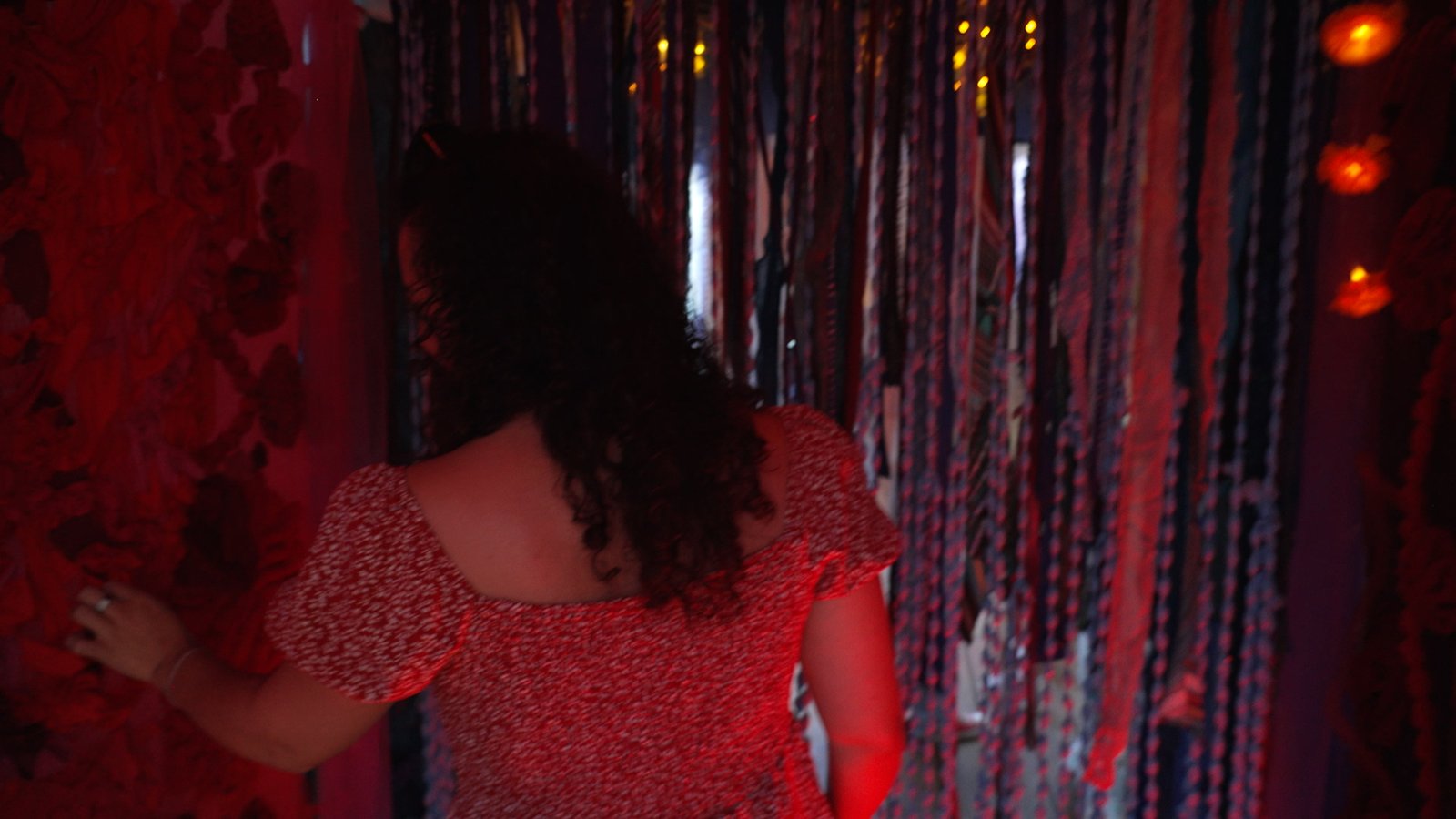
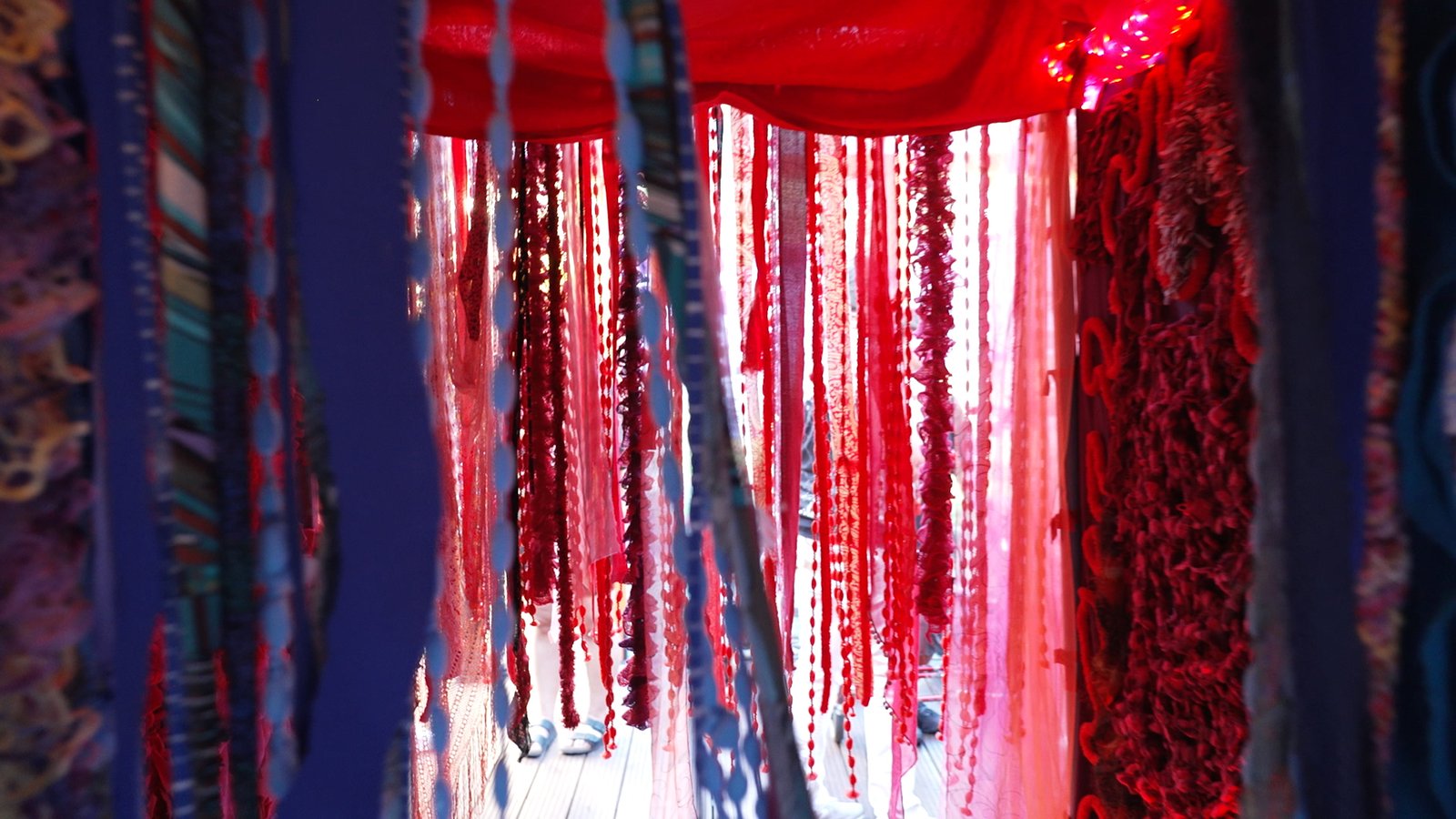
The journey begins behind red curtains, in The Red Room: The Womb. Warm, dimly lit and enveloped in soft fabrics, the space evokes the sheltered environment of the womb. Different textures invite visitors to explore through touch, while a low, continuous heartbeat plays through a bass speaker, giving the room a quiet, living pulse. Here, each participant begins primarily alone, with themselves.
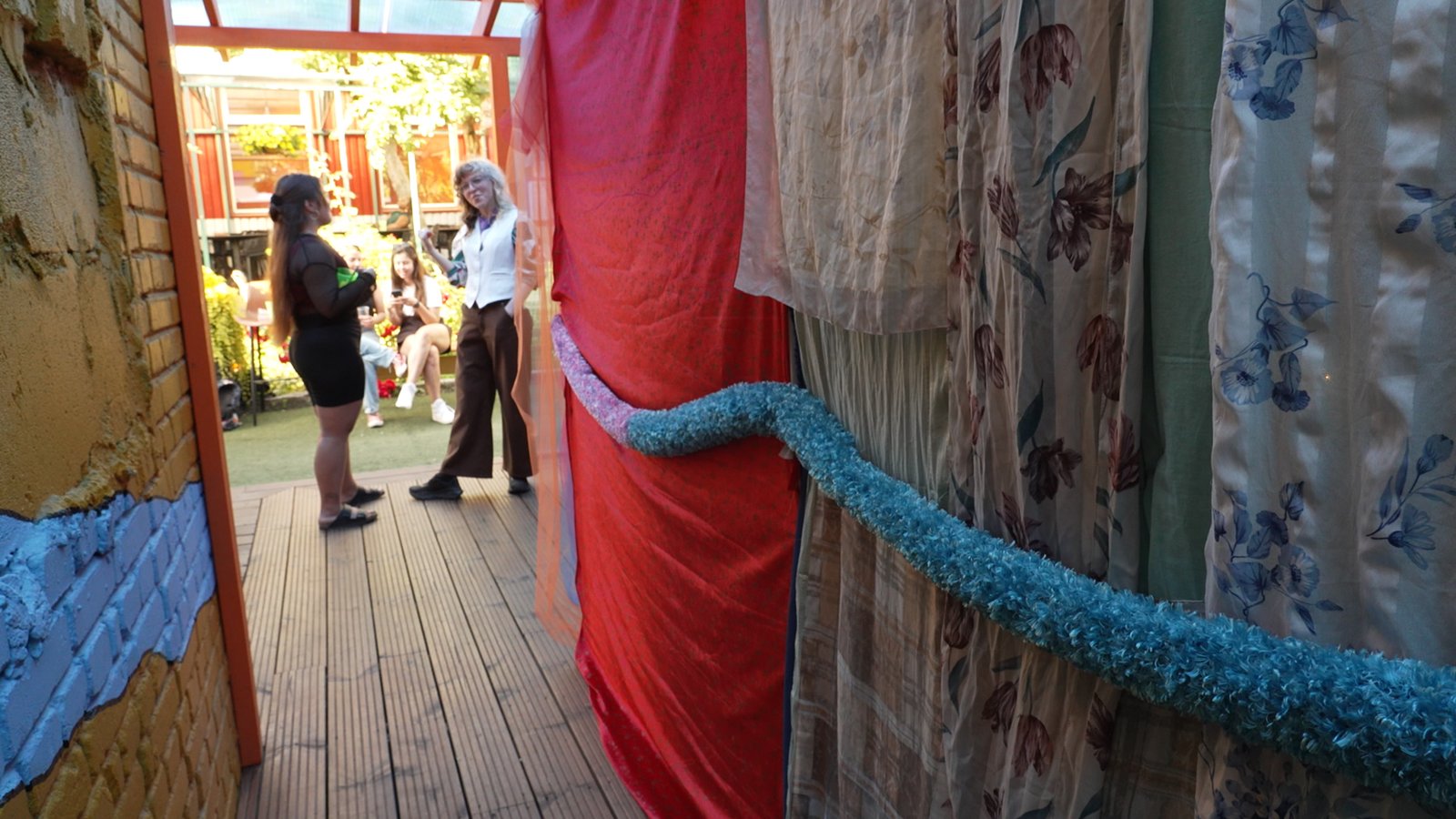
Blue curtains lead into The Blue Room: The World’s Intervention, where the experience begins to open towards the other person. A central fabric partition is punctuated with openings and pockets containing small objects. Visitors can reach through, exchange things, offer a hand, look at one another or simply remain on their own side. There is no obligation to interact. A gesture can be offered, accepted or declined. The space becomes a place for discovering boundaries, curiosity and consent.
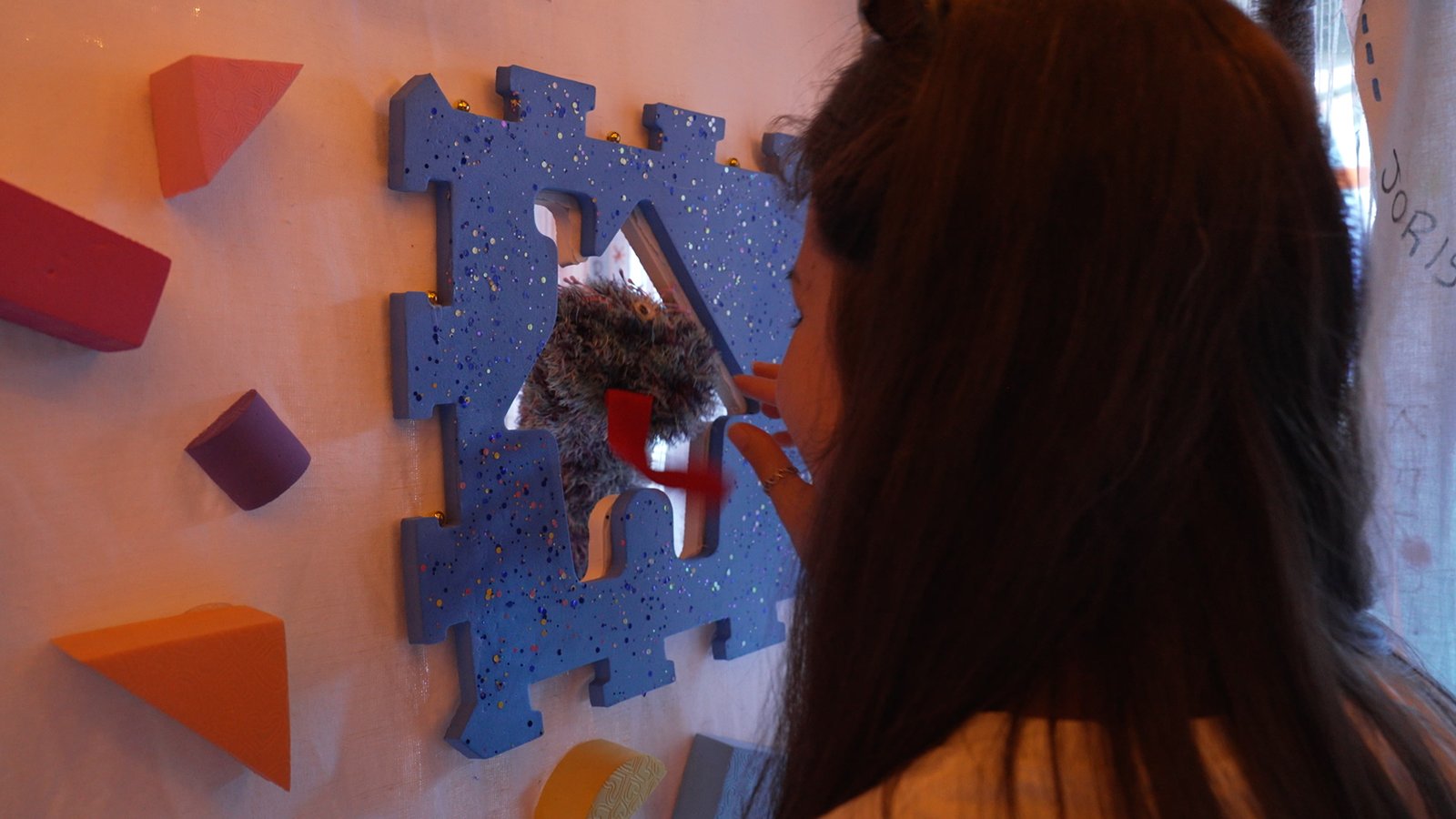
The journey culminates in The White Room: The Encounter, where the two participants finally meet face to face. A short film brings together images of people, nature, animals, care and birth, alongside people from different places speaking about their names and what “home” means to them. Soft objects and building blocks invite further exploration, while chairs offer a place to sit, pause and stay for as long as needed.
In this final room, visitors are also invited to write on a canvas who they are and what home means to them. Their words remain behind, becoming part of the installation and joining the traces left by those who came before.
Accessibility as artistic language
For THE PASSAGE, accessibility was not added after the artwork was completed. It was part of the creative process from the beginning, influencing the way the installation was designed, built and experienced.
The two passageways are adapted for wheelchairs and other mobility devices, with seating available at the end of the journey. Information is presented clearly in Estonian and English, while an introductory Estonian Sign Language video with subtitles is available before entering the installation. Visual materials are subtitled, and audio description and descriptive guidance offer additional ways of engaging with the work.
Visitors can also choose to experience the installation through a guided tour led by the artists. They may close their eyes and encounter the different spaces through spoken description, touch and physical guidance. A wheelchair is also available on site for visitors who may need or wish to use one.
These options do not prescribe a single “accessible” way of experiencing the artwork. Instead, they expand the number of possible encounters with it.
A space shaped by choice and encounter
There is no single correct way through THE PASSAGE. Visitors can decide how long to remain, whether to move together or separately, whether to interact or simply observe, which senses to engage, and when to pause, leave or return. Accessibility here is not only about removing barriers, but about creating choices and making space for different ways of experiencing the work.
This approach also shaped the making of the work. Developed through the Collaborative Working Group, the installation brought together the artists, disabled participants, accessibility practitioners and creative professionals, whose feedback informed everything from communication and accessibility to the physical construction of the space. As Mare Kõrtsini, a member of the group, reflects:
Discussing and giving advice on how to keep the installation strong and solid, while not hindering the artistic part, was great.
The work continued to evolve through this process, with adjustments to scale, fabrics, colour contrasts, equipment placement and visitor pathways. Its handmade character became part of the experience too, with visitors taking time to notice the sewing, drawing, gluing and construction that make up the environment.
There was space, too, simply to stay. Some visitors lingered, exploring the fabrics and objects, watching the film, playing or sitting quietly. Others left their own words behind, adding another layer to a space that was constantly being shaped by the people who entered it.
Perhaps, in the end, THE PASSAGE is less about reaching a destination than about what happens along the way: the moments of touching, listening, meeting, choosing, and leaving something of yourself behind. A journey shared with another person, carrying with it a simple question: what does it take for a place, or an encounter, to feel like home?
Credits
- Artists: Sara Fontana, Marleen Kuusik, Heleri Luuga (Open P.Arts Collective)
- Accessibility Solutions: Kai Kunder, Ene Oga
- Easy to Read: Janek Muru, Kerttu Rakke
- Collaborative Working Group: Mari Tuulik, Daniel Kotsjuba, Mare Kõrtsini, Hendra Raud
- Video Documentation: Andres Loorand
- Photography: Meelis Joost, Mari Tuulik
- Production: Estonian Agrenska Foundation, in cooperation with the Estonian Chamber of People with Disabilities
Open P.Arts Collective
Open P.Arts Collective (Sara Fontana, Marleen Kuusik and Heleri Luuga) builds bridges between the individual and the collective through sensory and shared experience, holding together the shared journey of human experience and its specificity for each person. The collective believes that everyone has the right to experience and create art, regardless of physical or mental ability.