MISSING FREQUENCIES
Nafsika Hadjichristou · Cyprus
When sound is felt, seen and imagined
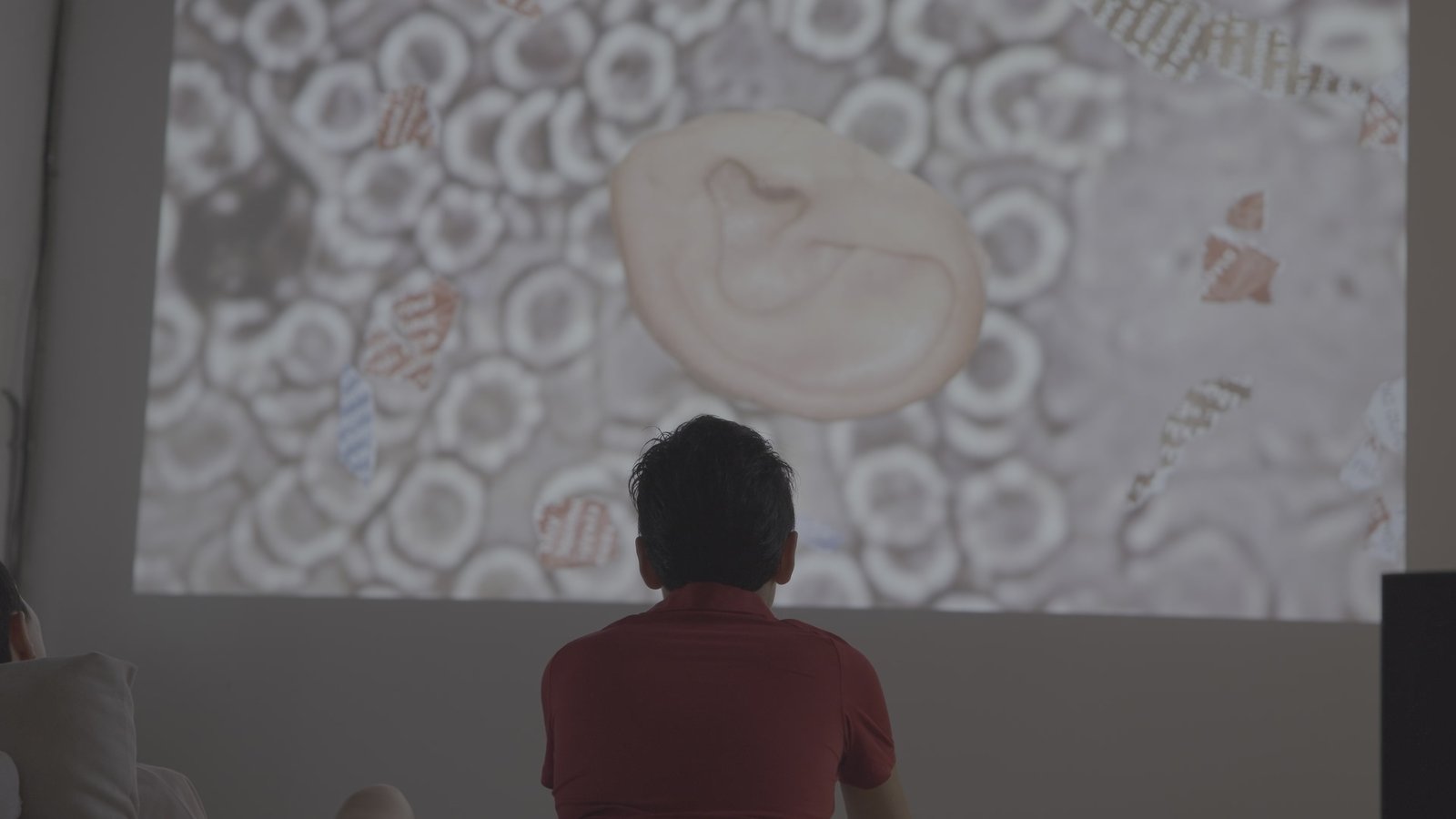
Created by artist Nafsika Hadjichristou within the framework of the P.A.I.R. project, MISSING FREQUENCIES is a multisensory video installation exploring the experience of partial hearing.
Bringing together moving image, photography, animation, collage, experimental sound and haptic technology, the work creates an intimate encounter with shifting perception. Sound moves across different sensory forms, becoming image, text, texture and vibration — not to explain partial hearing from the outside, but to let visitors feel their way into it.
A composition of fragments
The work developed through a process of gathering and combining fragments. Moving images, photographs, textures, animations, collage and experimental sound were brought together into an open composition. Rather than following a conventional storyline, meaning emerges through the relationships between these elements and through the different ways visitors choose to encounter them.
The development of the installation was shaped in dialogue with the Collaborative Working Group, which brought together the artist, disabled participants, accessibility practitioners and creative professionals. Their feedback accompanied the work as it developed, helping to shape both the artistic process and the conditions of the audience experience.
One of the central questions throughout the process was simple, but far-reaching: how much do you need to already know about accessibility before you’re allowed to take part in it?
Many people hear the word 'accessibility' and are afraid to engage because they feel they must already know everything. As a result, they remain at zero because they are afraid to take the first step.
Being part of a group where we could discuss how the artwork was developing, offer feedback, and explore the artist's ideas together was very valuable. I believe art is something social.
Multiple ways into the work
In MISSING FREQUENCIES, accessibility was considered from the earliest stages and developed alongside the work’s artistic language, not added to it afterwards.
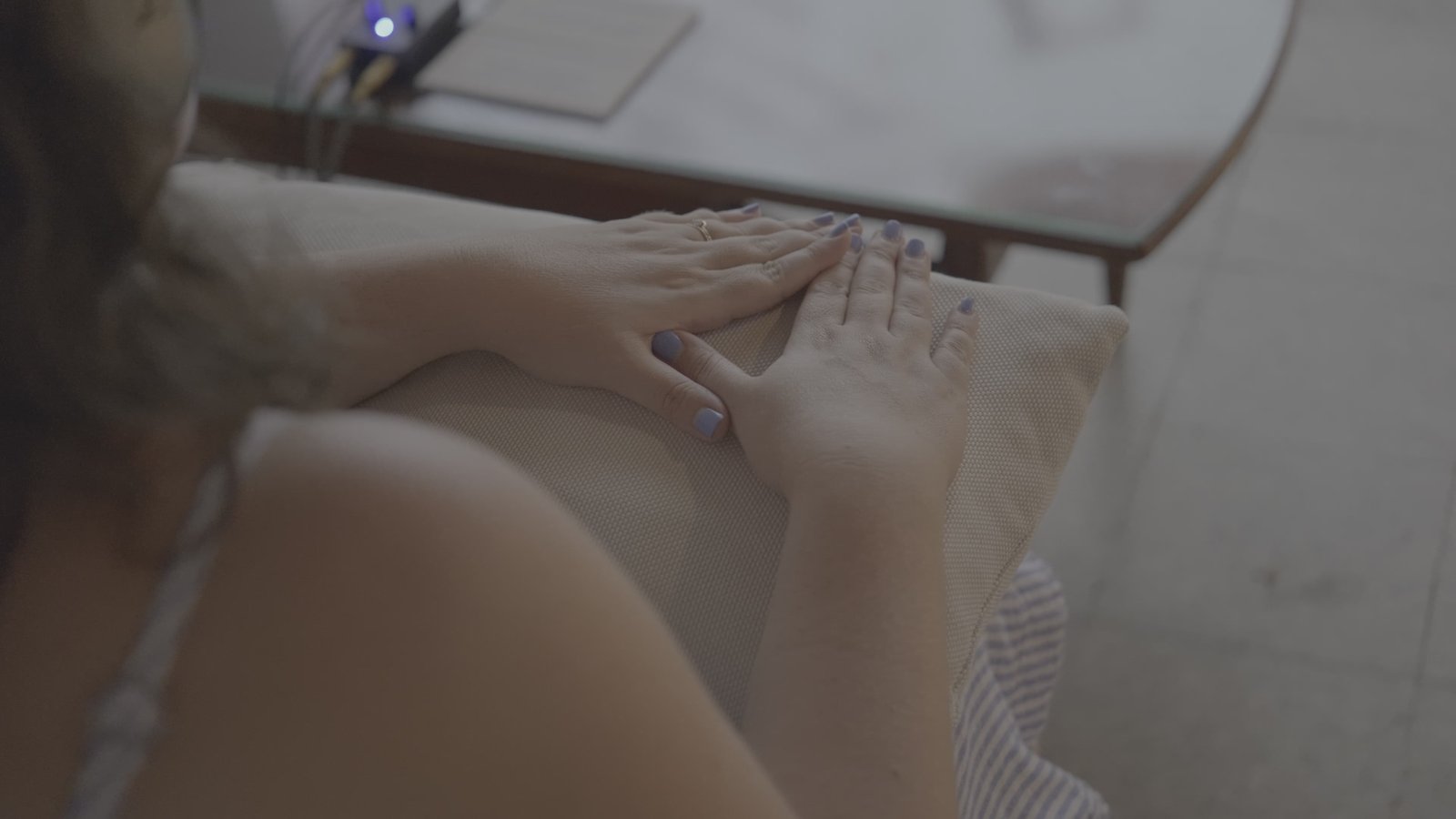
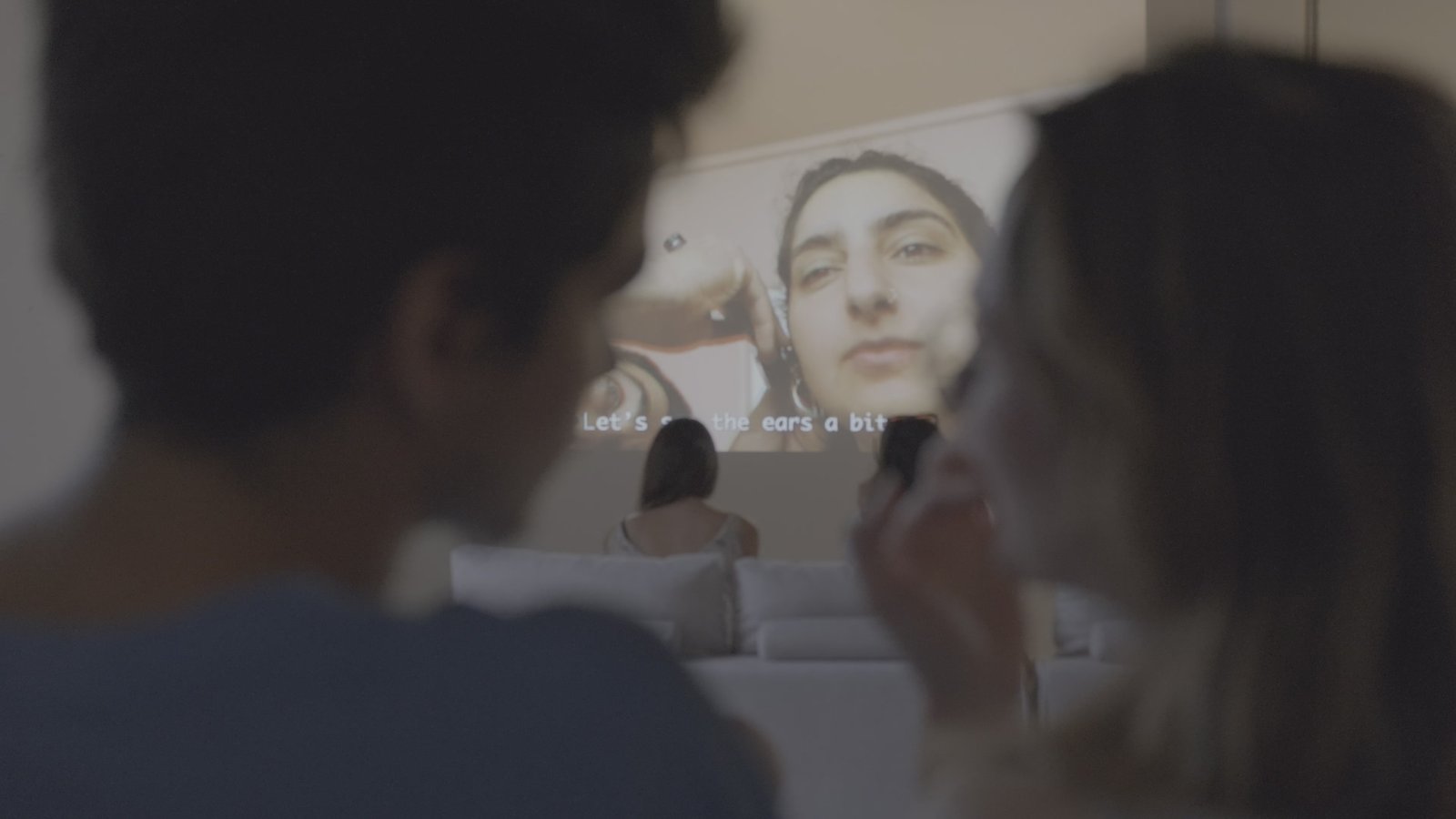
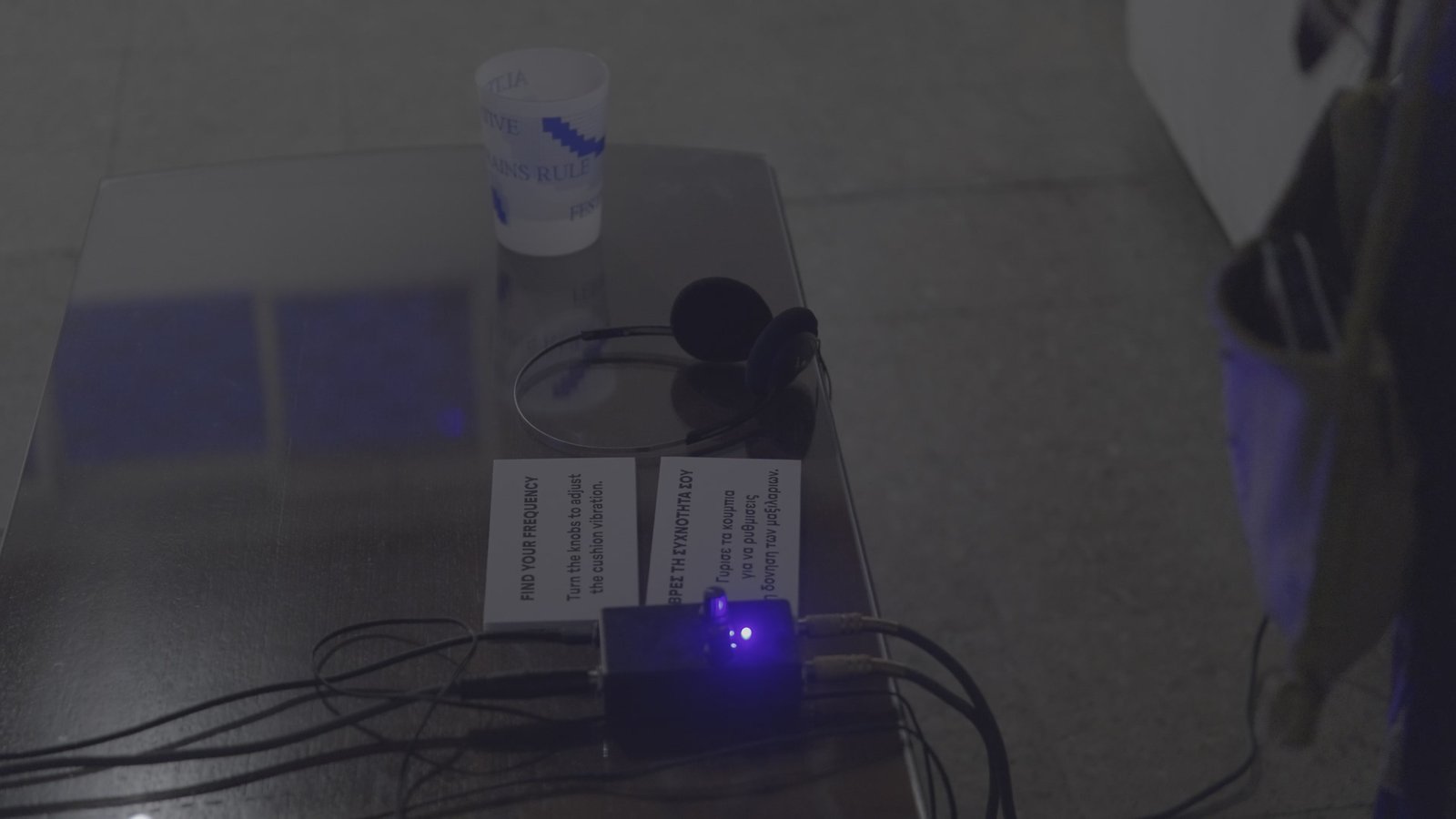
Continuous audio description played on headphones positioned near the seating, offering an interpretive layer that can be used alone or combined with the images, captions, sound and vibration. Greek and English captions and labels, in large, bold, simple lettering, provide visual access to language and information. Two haptic cushions translate rhythm, bass and intensity into vibration, letting visitors feel the sound design through their hands, chest or stomach. Cypriot Sign Language hosts supported the artist’s introduction to the work during the opening.
The installation brings together:
- continuous audio description
- bilingual (Greek/English) captions and labels
- haptic translation of rhythm, bass and intensity
- Cypriot Sign Language hosting at the opening
- flexible, considered seating at varying distances from the screen
Accessibility became a form of translation, but also a form of invention. The haptic cushions in particular give visitors a way of encountering the artist’s intentions through the body rather than through hearing alone.
Encountering sound differently
There is no prescribed route through the installation. Visitors can sit close to the screen or further away. They can listen to the audio description while watching the work, focus on captions, hold a haptic cushion or move between different sensory layers. They can experience the installation alone or with others, leave the space, take a break and return.
Some visitors experimented with these possibilities in ways the creative team had not anticipated. They closed their eyes while holding the vibrating cushions. They listened to the audio description without looking at the screen. They deliberately shifted their attention between sound, image, text and vibration.
There are many ways to experience a work of art. While holding the vibrating cushion, I tried not to rely on hearing. Then I closed my eyes to experience it without sight. It made me leave behind my usual way of experiencing art, to think, question, and encounter the work differently.
Touching the cushion and feeling the intensity of the artist's experience in my chest and hands was very different. It was intense and beautiful because I felt I could step into another person's shoes and begin to understand what partial hearing might mean.
Accessibility as a creative process
The installation continued to evolve throughout its development and final presentation.
Seating arrangements, labels, colour contrast, equipment placement and visitor movement were reviewed and adjusted as the work took shape in the exhibition space. Artistic and accessibility decisions informed one another through testing, feedback and revision.
This process revealed that access is not achieved through one solution. It can grow through the number of possibilities an artwork offers for people to enter, navigate and experience it.
At the same time, the work raised new questions for future development. How might haptic technology communicate more detailed qualities of sound, such as texture, frequency or movement? How can audio description, captions and tactile elements become even more deeply embedded in the artwork?
These questions remain part of the work’s ongoing exploration.
By bringing sound, image, text and vibration into dialogue, MISSING FREQUENCIES opens up a space where perception is not fixed, but constantly shifting.
And perhaps this is also a question beyond the installation itself:
What else becomes possible when we stop assuming that sound belongs only to the ears?
Credits
- Artist: Nafsika Hadjichristou
- Sound Design: Antonis Antoniou
- Haptics: Yiannis Souhis
- Collaborative Working Group: Demetra Nikodemou, Roz, Eve Petrakidou, Marina Ierides, Nina Poulouzasvili, Melina Theodorou, Martha Georgiou, Constantinos Kyprianou
- Video Documentation: Antonis Pouliasis
- Photography: Michalis Demetriades
- Production: ABR - Alternative Brains Rule
Nafsika Hadjichristou
Nafsika Hadjichristou is a visual artist from Cyprus, working across film, photography, and experimental audiovisual forms. With a background in documentary and a deep commitment to collaborative and participatory practice, she has worked locally, as well as in solidarity with communities in Latin America. She is currently an artist-in-residence in MATCH (The Mediterranean as the Climate Hotspot – Creative Europe). Her work explores how visual narratives can nurture social change, with attention to inclusive and accessible practices.
Weaving together moving image, writing, scrapbooking, animation, and sound, her film experiments move between diary, archive, and collective memory, responding to social and environmental urgencies with sensitivity and care. She holds a BSc in Film and Television Production from the University of York.